
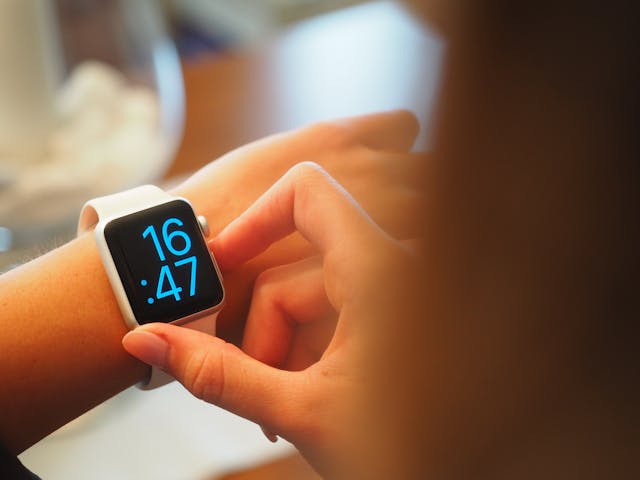
You know when it comes to time, there are a lot of different ways of looking at it. Here is one way I often do: there is big time, and there is little time. Big time means long periods. I’m talking about years, ages, and eons. Little time is more of a day-to-day thing, with hours and minutes and seconds.
You get some of each kind of time in the Bible. Here might be some obvious examples:
Genesis 2:1-3
2 Thus the heavens and the earth were completed in all their vast array.
2 By the seventh day God had finished the work he had been doing; so on the seventh day he rested from all his work. 3 Then God blessed the seventh day and made it holy, because on it he rested from all the work of creating that he had done.
And how about this?
Genesis 7:11-12
1 In the six hundredth year of Noah’s life, on the seventeenth day of the second month—on that day all the springs of the great deep burst forth, and the floodgates of the heavens were opened. 12 And rain fell on the earth forty days and forty nights.
There is a lot of time mentioned in those passages. Go back and read them again, and pick out all the references to time.
The New Testament has its fair share too:
Matthew 4:1-2
4 Then Jesus was led by the Spirit into the wilderness to be tempted by the devil. 2 After fasting forty days and forty nights, he was hungry.
Whether you are in the literal or symbolic camp on “40 days,” you have to admit the stories are telling you about a long time that passed. I think there is quite a lot of “big time” in the Bible. Things that took awhile, and stories that spanned generations. Little time, though? I just don’t think people lived by time that much back then. There weren’t that many timetables. It makes me think about the way we keep track of time nowadays. Why do we do it? One glaring example is work and school and their related schedules. Most people don’t have the luxury of going to work on their own schedule. And meetings are often set by someone besides you. You can add other things like doctor’s appointments, and organized entertainment to that too. It is almost impossible to be completely free of keeping time today.
But back then? Fisherman may not have needed to know exactly what time it was. Morning, mid-day, when the fish were biting, and when the market opened were the times they needed to be aware of. And what about shepherds? I doubt they kept up with it much either. There aren’t really that many examples of Jesus keeping time either:
Matthew 6:25-27
25 “Therefore I tell you, do not worry about your life, what you will eat or drink; or about your body, what you will wear. Is not life more than food, and the body more than clothes? 26 Look at the birds of the air; they do not sow or reap or store away in barns, and yet your heavenly Father feeds them. Are you not much more valuable than they? 27 Can any one of you by worrying add a single hour to your life?
Does this sound like a man who is interested in what time it is?
Wearable time pieces started out in Germany in the 16th century, created by Peter Henlein. We don’t know if he was the first person ever to create a watch though. His creations were curiosities of the rich, worn as pendants around the neck. They weren’t even used to tell time. Rather they were just symbols of nobility. When waistcoats later became popular these pendants were modified to fit into a pocket. That is where the concept of pocket watches came from.
It was the advent of the railroad that caused us to really start to think more about keeping time. Cities kept their own time before that, but when they became connected by rails it became important to have a time standard through the country. If a train was leaving the station at a certain time and you needed to be on it, you needed to know the same time the train conductor had.
The first wristwatches were worn by women. Men didn’t start the practice until the British Army started using them in the 1880s. They needed to synchronize their time to coordinate troop movements and attacks. Quartz watches came about in 1969, and by 1974 the watch accuracy was on the order of 12 seconds per year. Now we use phones and smartwatches to keep the time.
The average person checks their phone 96 times daily, averaging out to about once every 10 minutes of our waking life. Many of these checks are time related. How often do you check your watch? How often do you check your phone? It can be too much, you know. There is something called temporal anxiety, which is defined as a persistent unease about the passage of time. When we are so focused on the time our attention narrows, and we may not notice our surroundings as much. Instead we are worried about what comes next. What meeting are we missing? How long until I have to be somewhere? We may have trouble connecting to others due to this preoccupation. You probably know this when you think of a typical work day vs. a vacation. Which one of those are you more apt to know what time it is?
School gives us an interesting example. Do students stay in school until they have learned something that day, or do they stay until the bell rings?
Spirituality is rarely time centered. So how do we escape the “time trap” of life? Well, meditation and prayer help, but so does getting outside in nature. Exposure to nature has been shown to increase people’s generosity and social behavior. And we can also create boundaries with the technology that invites us to check the time continually. We can (and should) turn that stuff off every once in a while. People who take breaks from their devices talk of significant improvements in relationship satisfaction.
It is time we cared less about time, and more about people.
God Bless