
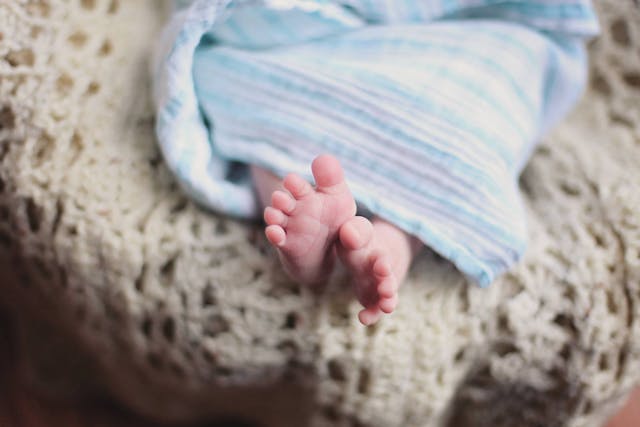
We have a new dog in the house. And this means we have a lot of new dog toys and accessories. She has her toys, her treats, her stuffed animals, and her blanket. She loves her blanket.
Did you ever have an imaginary friend growing up, of did someone you know have one? Psychologists will tell you this is perfectly normal, that a child’s imaginations really start to take off when they are 2-3 years old. I have heard that about 65% of us have had a made up friend during that time in our lives. Kids enjoy the comfort of a friend, whether that person is real or not.
And then there is the security blanket. Just like our dog, kids love them. In the 1920s a security blanket was usually a piece of fabric that covered the child while they were sleeping. Its purpose was to secure the child to the bed and had clips to fasten it for that purpose. For many children this became so familiar that they needed to have it with them wherever they went. That kind of thing didn’t have to be a blanket either. My son loved his Sesame Street figures and carried them with him all the time. Why do so many children have things like this?
Emotional support is the likely reason. Experiences that we take for granted, like falling asleep in a dark room, are new and sometimes scary for a child. A security blanket often serves as a coping mechanism for those scary times. It also carries with it a sense of ownership and companionship. This makes sense when you consider a security blanket will be near a child all day. And the blanket can bridge the gap between a child and their parents. When the parents can no longer be there all the time, the blanket is there to fall back upon.
There is a theory psychologists have been using for a while now, called Maslow’s Hierarchy of Needs, which attempts to define the levels of needs a person has. Specifically, we are motivated to fulfill those needs in a certain order. The first order has the very basics of life in it, like food, water, and shelter. Think of yourself stranded on an island alone. What would you try to do first? Most likely you would secure or at least look for these things. Once you have those needs met, you move on to the next level, which is about safety and security. On the island you would take steps to prevent attacks from predators or the effects of bad weather. It is important to know we have someplace safe to be.
How do we get this sense of security in our adult lives? We can get it from the government (imagine not having any police presence in your city). You can also get it from familiarity, and by staying in larger groups as you walk down a darkened street. What if you were choosing a hotel to stay in a city you weren’t familiar with? How would you do it? Safety is one of the things you would have to consider. You would look for the kind of neighborhood the place was in, whether it was well lit, the accessibility of it, and how it rates among people who have stayed there before.
The Holy Family didn’t have any of those things when they came to Bethlehem.
Luke 2:1-8
2 In those days Caesar Augustus issued a decree that a census should be taken of the entire Roman world. 2 (This was the first census that took place while Quirinius was governor of Syria.) 3 And everyone went to their own town to register.
4 So Joseph also went up from the town of Nazareth in Galilee to Judea, to Bethlehem the town of David, because he belonged to the house and line of David. 5 He went there to register with Mary, who was pledged to be married to him and was expecting a child. 6 While they were there, the time came for the baby to be born, 7 and she gave birth to her firstborn, a son. She wrapped him in cloths and placed him in a manger, because there was no guest room available for them.
The inn would have provided security. The inn would have been around other people. It was probably well lit. It was most likely free from robbers or wild animals. The manger though? There is not much security there. At least, there was no human-supplied security. Instead Mary and Joseph received supernatural security. Nothing bothered them that night. Is there a lesson here? We are seeing in this story a transition from human-provided security to God-provided security.
Now look at the shepherds. Where is the security there? In sheep there is a phenomenon called “wool break,” where weak areas develop in the sheep’s wool fibers. The primary cause of wool break is stress. It was the shepherd’s job to prevent this by supplying security to the flock. But then look at what happens when Jesus is born:
Luke 2:15
15 When the angels had left them and gone into heaven, the shepherds said to one another, “Let’s go to Bethlehem and see this thing that has happened, which the Lord has told us about.”
Who is watching the sheep? Not any humans. Again, we see a transition from human-provided security to God-provided.
What is the most iconic security blanket in our culture? You probably guessed it. It’s Linus from the Peanuts comic strip. Their first ever cartoon special was the Christmas one, where the students put on a Christmas pageant. There is a part of the cartoon where Linus tells Charlie Brown “what Christmas is all about,” by reciting Luke 2:8-14. I’m sure you have seen this, but do you remember what Linus does during this speech? Right about the time he says “fear not,” he drops his blanket. What powerful symbolism. The birth of Jesus frees us from our fears. The birth of Jesus frees us from the habits we are unable (or unwilling) to break ourselves.
The birth of Jesus allows us to simply drop the false security we have been grasping so tightly and lear to trust and cling to God instead.