
Mark is an interesting Gospel. It’s pretty brief at just 16 chapters long. There isn’t a Christmas story at all. Mark gets to the point.
Mark 1:1
The beginning of the good news about Jesus the Messiah, the Son of God
Mark doesn’t beat around the bush. He tells you immediately who Jesus is. I get the sense from the writer that there is no time to waste with this Gospel. To be fair there is a lot of good stuff there. The parables are there (at least some of them). Here is one from Chapter 4:
Mark 4:1-8
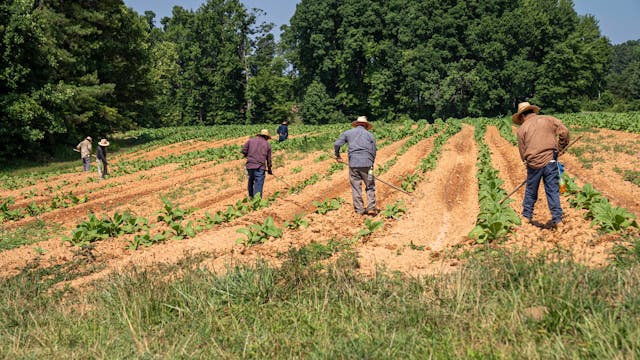
4 Again Jesus began to teach by the lake. The crowd that gathered around him was so large that he got into a boat and sat in it out on the lake, while all the people were along the shore at the water’s edge. 2 He taught them many things by parables, and in his teaching said: 3 “Listen! A farmer went out to sow his seed. 4 As he was scattering the seed, some fell along the path, and the birds came and ate it up. 5 Some fell on rocky places, where it did not have much soil. It sprang up quickly, because the soil was shallow. 6 But when the sun came up, the plants were scorched, and they withered because they had no root. 7 Other seed fell among thorns, which grew up and choked the plants, so that they did not bear grain. 8 Still other seed fell on good soil. It came up, grew and produced a crop, some multiplying thirty, some sixty, some a hundred times.”
This is kind of a rare parable because it doesn’t come right out and tell you it is about the Kingdom of God or Heaven like most of the other ones. It just launches into a story right away. And this one is a little weird because of what comes after it.
Mark 4:9-12
hen Jesus said, “Whoever has ears to hear, let them hear.”
10 When he was alone, the Twelve and the others around him asked him about the parables. 11 He told them, “The secret of the kingdom of God has been given to you. But to those on the outside everything is said in parables 12 so that,
“‘they may be ever seeing but never perceiving,
and ever hearing but never understanding;
otherwise they might turn and be forgiven!’”
What is going on with this? The secret has been given to the disciples but everyone else gets parables? Really? And have you ever wondered why this parable, out of all of them, gets a detailed explanation from Jesus? If you keep reading you see Jesus talk about a Farmer sowing the Word, and then he talks about each type of soil and what it would mean, ultimately getting to the “good soil” representing people who hear the Word and accept it. Is this all there is to it, a lesson for us to be good soil?
Let’s come back to this, but first let’s talk about irony. The reason will become important soon. What is irony? One definition is an expression of one’s meaning by using language that signifies the opposite. Another definition is when an event happens that is deliberately contrary to what one expects, often with an amusing result. I found an example of this when I learned of a University of British Columbia tradition for an annual snowball fight. One year this event had to be rescheduled because there was too much snow.
Irony doesn’t have to be funny. Sometimes it is practical, like when we cause a controlled burn in the fields and forests so that we can prevent fires. Parenting is often ironic too. As parents we sometimes allow children to get into a small degree of trouble so that they can learn from the experience and avoid a larger source of trouble later in life.
And then we have dramatic irony. This occurs in literature or film when the audience/reader knows something the characters don’t. Alfred Hitchcock showed this kind of irony when he filmed a bomb strapped to the underside of a table in a restaurant. Then he would show scenes in that restaurant of people unaware of the impending doom. This irony is formed because we know something they don’t and a lot of tension is created. In Shakespeare’s Romeo and Juliet, the audience knows that Juliet is faking death, but Romeo doesn’t know. That’s another example of dramatic irony at work.
There is definitely an air of irony with Jesus, because he came to show us a better way and was killed because of it. But also there is something else in Mark we can point to. The reader knows right away who Jesus is (it’s there in the first verse), but not a lot of other people do. In fact Jesus seems to go out of his way to keep people from knowing who he really is.
Mark 1:43-50
43 Jesus sent him away at once with a strong warning: 44 “See that you don’t tell this to anyone. But go, show yourself to the priest and offer the sacrifices that Moses commanded for your cleansing, as a testimony to them.” 45 Instead he went out and began to talk freely, spreading the news. As a result, Jesus could no longer enter a town openly but stayed outside in lonely places. Yet the people still came to him from everywhere.
Perhaps there is a deeper meaning with the parable of the sower. Maybe Jesus wasn’t talking about the Kingdom of God I the parable but instead this is an example of dramatic irony in Mark’s Gospel. The soil on the path might represent people who reject Jesus’ claim outright (such as close family). The rocky soil represents the people who think they know who Jesus is but are completely wrong. The thorny soil might be the people who don’t understand what it really means to follow Jesus. And the good soil are the people who follow him to the very end.
The rocky soil doesn’t work because it isn’t personal. And it has to be personal for the Word to be effective. That might just be the secret meaning of this parable. We hide the soil in the ground. No one else can see it, but it is there, taking root in your inner being. It transforms you because you spend time with it. You nurture it. You let it grow. Mark is planting the seed in the listeners by telling them up front who Jesus is. He uses dramatic irony to show the value of maintaining silence about who Jesus is until that seed has had time to mature. Only then will we be ready to teach others who Jesus really is and what he was really about.